
Object Record
Images
Metadata
Title |
LeCroy Waveform Digitizer for the AP2 Supersonic Laser Vaporization Cluster Beam Apparatus |
Object Name |
Digitizer |
Object ID |
2004.026.004 |
Description |
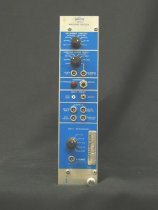
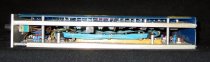
Blue and silver aluminium rectangular component; inside of unit are a number of chips and wires; back has three rectangular prongs; front is the control panel: (from top to bottom) 2 small black plastic dials, two input/output ports, small red light, small black button, six input/output ports, one small black plastic dial, one input/output port; also on front is an ID tag from Rice University |
Dimensions |
H-8.75 W-2 D-12.125 inches |
Material |
Aluminium, Plastic, Brass, Plastic |
Made |
LeCroy |
Collection |
Richard Smalley Collection |
Search Terms |
AP2 Supersonic Laser Vaporization Cluster Beam Apparatus Buckminsterfullerene Carbon Instrument Accessories Magnetic Resonance Smalley, Richard E. Kroto, Harold Curl, Robert Vapor Vaporized |
Provenance |
Discovered in 1985 by the Rice University research team headed by Richard Smalley, Robert Curl Jr., and Sir Harold Kroto, Carbon 60, also known as buckminsterfullerene or a buckyball, is an allotrope of carbon that has a molecular shape similar to a soccer ball or the geodesic domes of futurist architect Richard Buckminster Fuller. Extremely stable and capable of conducting electricity, buckyballs [] opened up a new area of study in fullerenes, which are being explored for their potential in nanotechnology, electronics, optics, and other material science fields. In the discovery of buckyballs, pulsed laser beams directed at a sample of carbon in the main chamber of the AP2 instrument created a plume of vaporized carbon hotter than the temperature at which some stars are formed. A stream of helium brought about sudden and extreme cooling and the clustering of carbon atoms. A skimmer at the threshold of an adjacent vacuum chamber collected the clusters for analysis by a mass spectrometer. Drs. Smalley, Curl, and Kroto shared the 1996 Nobel Prize in Chemistry for "their discovery of fullerenes." |